A jammed garbage disposal is often something you can fix yourself, but knowing when to stop and call a plumber is just as important. This guide walks through how to safely troubleshoot the problem, what causes it and how to prevent it from happening again.
You flip the switch and hear that low humming sound, but nothing spins. Maybe the sink starts backing up. Maybe the disposal shuts off completely. Either way, a garbage disposal jammed in the middle of dinner cleanup is annoying, and it can feel urgent when water is sitting in the sink.
In Texas homes, garbage disposals can take a beating. Hard water buildup, older plumbing systems and busy kitchens can all play a role. Around the holidays, when more food scraps, grease and leftovers make their way toward the sink, disposal problems can pop up fast.
The good news is that some jams can be fixed with a few careful steps. In this guide, we’ll walk through common signs of a jammed disposal, what causes the problem, what not to do and when it’s time to stop troubleshooting and contact a licensed plumber.
Michael Marugo, Plumbing Operations Manager at ABC Home & Commercial Services, offers expert guidance to help homeowners troubleshoot and prevent a jammed garbage disposal.
Signs Your Garbage Disposal Is Jammed
“A humming sound with no grinding noises and a disposal that has trouble draining are the most common signs of a jammed disposal,” Marugo says.
A jammed garbage disposal usually gives you a few warning signs before it stops working completely. As Marugo mentioned, the most common clue is a humming sound when you flip the switch, but the grinding plate does not move.
Other signs your disposal may be jammed include:
- Humming sound, but nothing spins
- Standing water in the sink
- Disposal suddenly shuts off
- Burning smell near the unit
- Loud grinding or rattling noises
- Reset button keeps tripping
- Water backing up into the dishwasher
If you notice a burning smell, repeated shutoffs or water backing up into another appliance, stop using the disposal until you can get it checked out. Forcing it to run can make the problem worse.
Most Common Causes of a Jammed Garbage Disposal
“Excessive food debris and foreign objects are the most common causes of a jammed disposal,” Marugo says.
A garbage disposal can handle small food scraps, but it isn’t built to grind everything that comes off a plate. Most jams happen when something hard, fibrous or sticky gets caught in the grinding chamber or when buildup makes it harder for the parts to move.
Food Waste That Should Never Go Down the Disposal
Some foods are more likely to clog, coat or jam your disposal, especially when they are put down the drain in large amounts. Try to keep these out of your disposal:
- Grease, fats and cooking oil
- Celery fibers
- Corn husks
- Pasta and rice
- Coffee grounds
- Bones
- Eggshells
Eggshells are a common myth. Some people think they sharpen the disposal, but the thin membrane can stick to the sides of the unit, and the shell pieces can add to buildup in the drain line.
Many Texas plumbers also see more disposal jams after holidays like Thanksgiving, when potato peels, grease, turkey scraps and large amounts of food waste get pushed through the sink at once.
Foreign Objects Accidentally Falling In
Sometimes the problem is not food at all. Small household items can slip into the disposal and stop the grinding plate from turning.
Common culprits include:
- Silverware
- Bottle caps
- Twist ties
- Small toys
- Jewelry
If you think something fell into the disposal, turn off the power before checking.
Rust, Hard Water and Long-Term Wear
In Texas, hard water can leave mineral buildup on plumbing fixtures and appliances over time. That buildup can make an older disposal work harder than it should, especially if the unit already has rust, dull grinding parts or worn internal components.
Older homes may also have aging plumbing or older disposal units that are more prone to jams. If the disposal keeps sticking even after basic troubleshooting, the issue may be wear and tear.
Safety First: What NOT to Do
Before you try to fix a jammed disposal, focus on safety first. A disposal can still have risks, even when it is not spinning, so never put your hand inside the unit.
Start with these basic safety steps:
- Turn off the wall switch
- Unplug the disposal under the sink, if possible
- Turn off power at the breaker if you cannot unplug it
- Test the switch before working near the opening
- Use a flashlight to inspect the inside
- Wear gloves when handling anything near the drain
- Keep children away from the sink while you troubleshoot
Avoid pouring harsh chemical drain cleaners into the disposal. They can damage plumbing parts, splash back unexpectedly and make repairs harder. You should also avoid bleach mixtures, since mixing cleaners can create dangerous fumes.
Do not keep flipping the switch if the disposal only hums or shuts off again. Forcing the motor repeatedly can overheat the unit and turn a small jam into a bigger repair.

How to Fix a Jammed Garbage Disposal Step by Step
Step 1: Disconnect the Power
Before doing anything else, disconnect power to the disposal completely. Start by turning off the wall switch, but don’t assume the unit is safe just because the disposal is quiet.
For extra safety:
- Unplug the disposal under the sink if it has a plug
- Turn off the breaker if the unit is hardwired
- Test the switch before proceeding
A disposal can restart unexpectedly if power is still connected, even during a simple inspection.
Step 2: Check for Visible Obstructions
Use a flashlight to look down into the disposal chamber. Many jams are caused by objects that become wedged between the grinding plate and the side of the unit.
Common objects found inside disposals include:
- Silverware
- Bottle caps
- Twist ties
- Small bones
- Fruit pits
If you spot something inside, use tongs or pliers to remove it carefully. Never reach into the disposal with your hand, even if the power is off.
Step 3: Use the Allen Wrench Reset Method
“Most units will have an opening in the bottom for an Allen wrench, allowing the motor shaft to be turned by hand to dislodge the object,” Marugo explains. “Once dislodged, the object can be removed with any tool long enough to reach into the disposal. Do not reach into a disposal to remove an object by hand.”
Insert the wrench into the socket and slowly rock it back and forth. Some resistance is normal at first, especially if food debris or a small object is stuck inside. The goal is not to force the flywheel aggressively. You just want to loosen whatever is preventing it from turning freely.
If the wrench will not move at all or the disposal feels completely locked, stop forcing it to avoid damaging internal parts.
Step 4: Press the Reset Button
Many disposals include built-in thermal overload protection. When the motor overheats from a jam, the unit may shut itself off automatically to prevent damage.
Look for a small reset button on the bottom of the disposal. Once the motor cools down, press the button firmly until you hear or feel a click. That clicking sound usually means the overload protector has reset properly.
If the reset button keeps tripping repeatedly, the disposal may have a deeper electrical or motor issue that needs professional attention.
Step 5: Test with Cold Water
Once the jam appears cleared, turn on cold water before testing the disposal. Cold water helps solidify grease and food particles so they move through the drain more effectively instead of coating the pipes.
A healthy disposal should sound smooth and consistent during operation. Loud grinding, rattling or humming noises after troubleshooting may signal that something is still stuck or damaged.
When a Jam Means You Need a Professional Plumber
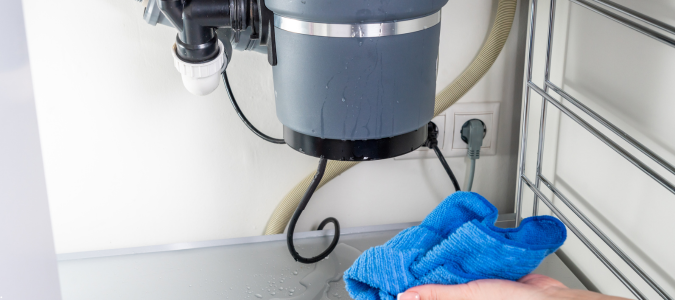
Some garbage disposal jams can be cleared by yourself at home. Others are signs that the unit has a larger mechanical, electrical or plumbing problem behind it. If basic troubleshooting doesn’t solve the issue, continuing to force the disposal can sometimes cause more damage.
“If you cannot clear the obstruction, or you have cleared it but the disposal will still not run, it’s time to call a plumber,” Marugo says. “If it runs but makes excessive noise, something may be damaged internally. And if you notice leaking from the bottom of the unit while it is running, a shaft seal may be damaged.”
It may be time to contact a licensed plumber if you notice:
- Electrical burning smells
- Water leaking from the disposal
- Cracks in the disposal housing
- Frequent jams or repeated reset button trips
- A motor that hums but still will not turn
- A disposal unit older than 8 to 12 years
Older disposals can wear down internally over time, especially in homes with hard water buildup or heavy kitchen use. In some cases, replacing the unit may make more sense than continuing to repair recurring problems.
Repair Versus Replace
If you are unsure whether you can safely repair your disposal, a licensed plumber can help. They will inspect the unit, check for damage and help you decide whether repair or replacement is the better long-term option.
How to Prevent Future Garbage Disposal Jams
A little maintenance goes a long way with a garbage disposal. Most jams build up slowly over time from food scraps, grease or everyday habits that put extra strain on the unit.
Best Daily Habits
Simple daily habits can help your disposal run more smoothly and reduce the chances of future clogs or jams.
“Run cold water before, during and after grinding up food waste, and add food waste in small portions. Wait for the grinding noises to finish before adding more,” Marugo says. “Follow food with 20 to 30 seconds of water to wash away any leftover food.”
Another simple habit worth adding: keep a strainer over the drain opening.
“Use a strainer in the disposal drain opening when not actively using the unit,” Marugo adds. “It prevents foreign objects from entering the disposal when it’s not in use.”
Cleaning Methods
Gentler cleaning methods are usually better for the unit and your plumbing.
Popular cleaning options include:
- Ice and coarse salt to help loosen buildup
- Citrus peels to reduce odors
- Baking soda and vinegar for light cleaning and deodorizing
For deeper cleaning tips and routine maintenance ideas, you can also read about how to clean your garbage disposal: How to Clean Your Garbage Disposal.
Signs Your Disposal Is Nearing the End of Life
Even with proper care, garbage disposals do not last forever. If problems keep returning, the issue may be wear and tear instead of one simple jam.
Signs the disposal may be nearing the end of its lifespan include:
- Frequent clogs or jams
- Loud or rough operation
- Slow draining
- Persistent odors that return quickly after cleaning
If your disposal is older and showing several of these warning signs at once, replacement may be more cost-effective than repeated repairs.
Frequently Asked Questions About Jammed Garbage Disposals
How Long Should a Garbage Disposal Last?
Should I Repair or Replace My Garbage Disposal?
Can Hard Water Damage a Garbage Disposal in Texas?
What Size Garbage Disposal Is Best for Families?
Why Texas Homeowners Trust ABC Home & Commercial Services
When a garbage disposal jammed issue turns into leaks, repeated resets or a disposal that will not spin, it helps to have an experienced plumber take a closer look. ABC Home & Commercial Services has served Texas homeowners for more than 75 years. Our team works with plumbing problems that range from everyday repairs to more involved fixture and drain issues.
“We have almost 600 years of combined experience in the field and 16 Master Plumbers on staff,” Marugo says. “ABC is also fully equipped to assist with other trades that can be incidental to plumbing work, such as repairing walls, floors, ceilings and tile, electrical work for new equipment installations or retrofits and landscaping work following excavation.”
Following a garbage disposal issue, our licensed plumbers can inspect the disposal, check for damage and help determine whether repair or replacement makes the most sense. We also offer same-day service when available, so you don’t have to keep working around a backed-up sink or disposal that won’t run.

Getting Your Kitchen Back to Normal
If your garbage disposal is jammed, start with the safest steps first: turn off the power, look for visible obstructions and avoid putting your hands inside the unit. In many cases, a simple jam can be cleared with tongs, an Allen wrench and a reset button.
Stop troubleshooting if you smell burning, see water leaking, hear loud metal grinding or notice the reset button keeps tripping. Those signs can point to a bigger problem with the motor, wiring, housing or drain connection.
A jammed disposal is frustrating, but forcing it can make the problem worse. When DIY steps do not solve the problem, contact a licensed plumber to prevent more damage and get your kitchen back to normal.