A washer or dryer acting up almost always falls into one of three buckets: it smells bad, it’s leaking water somewhere it shouldn’t, or it’s stopped running altogether. Each of those symptoms has its own set of usual causes, and they’re rarely related to each other even when they show up around the same time. The quickest path to a fix is figuring out which of the three you’re actually dealing with, then working through the specific causes for that symptom rather than guessing at the machine as a whole.
Why Sorting by Symptom Matters
Laundry appliances have a lot of independent systems working together: a water supply and drain, a heating element or gas burner, a motor and belt, a control board, and (on front-load washers especially) a rubber door gasket that traps moisture. A smell almost always traces back to moisture and residue, a leak almost always traces back to a hose, seal, or drain issue, and a machine that won’t run at all almost always traces back to power, the door latch, or a worn mechanical part. Because the causes barely overlap, treating “my washer is broken” as one problem usually wastes time. Treating it as three separate, narrower questions gets you to an answer faster.
Why Does My Washing Machine Smell Bad?
A musty or sour smell from a washing machine, especially a front-load model, is one of the most common laundry complaints homeowners deal with. It’s almost always caused by trapped moisture and detergent residue building up somewhere the water doesn’t fully drain or dry out: the rubber door gasket, the detergent dispenser drawer, or the drain pump filter. Cold-water and quick-cycle washing (better for energy use and fabric care) also means less hot water flowing through to rinse residue away, which can make the smell worse over time in machines that see a lot of those cycle types. Texas humidity compounds this: a laundry room that runs warm and closed-up for most of the year gives that trapped moisture less chance to dry out between loads than it would in a drier climate, which is part of why the smell can come back faster here than the same machine would show elsewhere.
The fix is usually a matter of cleaning the specific area holding onto moisture and residue, drying it out between uses, and running an occasional cleaning cycle. We’ve covered the exact causes and steps in more detail in our dedicated guide on why a washing machine smells bad.
Why Is My Dryer Leaking Water?
This one tends to surprise people, since a dryer doesn’t use water to actually dry clothes, but a handful of dryer designs and situations can produce a real leak. Steam-cycle and some ventless dryer models circulate a small amount of water internally, and a failed seal, cracked hose, or clogged condensation drain in those units can result in water pooling underneath. In a standard vented dryer, a “leak” is more often water traveling down from a nearby washing machine, a condensation issue from an improperly vented exhaust, or water backing up from a shared drain line. Because the actual source varies so much by dryer type and installation, this is a symptom worth diagnosing carefully rather than assuming the dryer itself has failed. Our guide on dryer leaking water walks through the different causes by dryer type.
Why Won’t My Dryer Start or Heat Up?
A dryer that won’t start at all is usually an electrical or safety-switch issue: a tripped breaker, a door latch switch that isn’t engaging properly, or (for gas dryers) an igniter that’s failed. A dryer that starts and tumbles but never heats up points somewhere different: a broken heating element, a blown thermal fuse (often caused by a clogged vent restricting airflow), or a gas supply issue. These are two different complaints with two different likely fixes, even though they both land under “the dryer doesn’t work.” For the won’t-start symptom specifically, see our guide on a dryer that won’t start. If your dryer runs but the smell is the real issue rather than the heat, our piece on what causes a dryer to smell covers that separately, since a smelly dryer and a smelly washer usually have different root causes despite living next to each other in the laundry room. ENERGY STAR’s appliance guidance is a useful outside reference for how a dryer’s heating and venting systems are supposed to work together when everything’s functioning normally.
When the Leak Is Actually Coming From the Washer
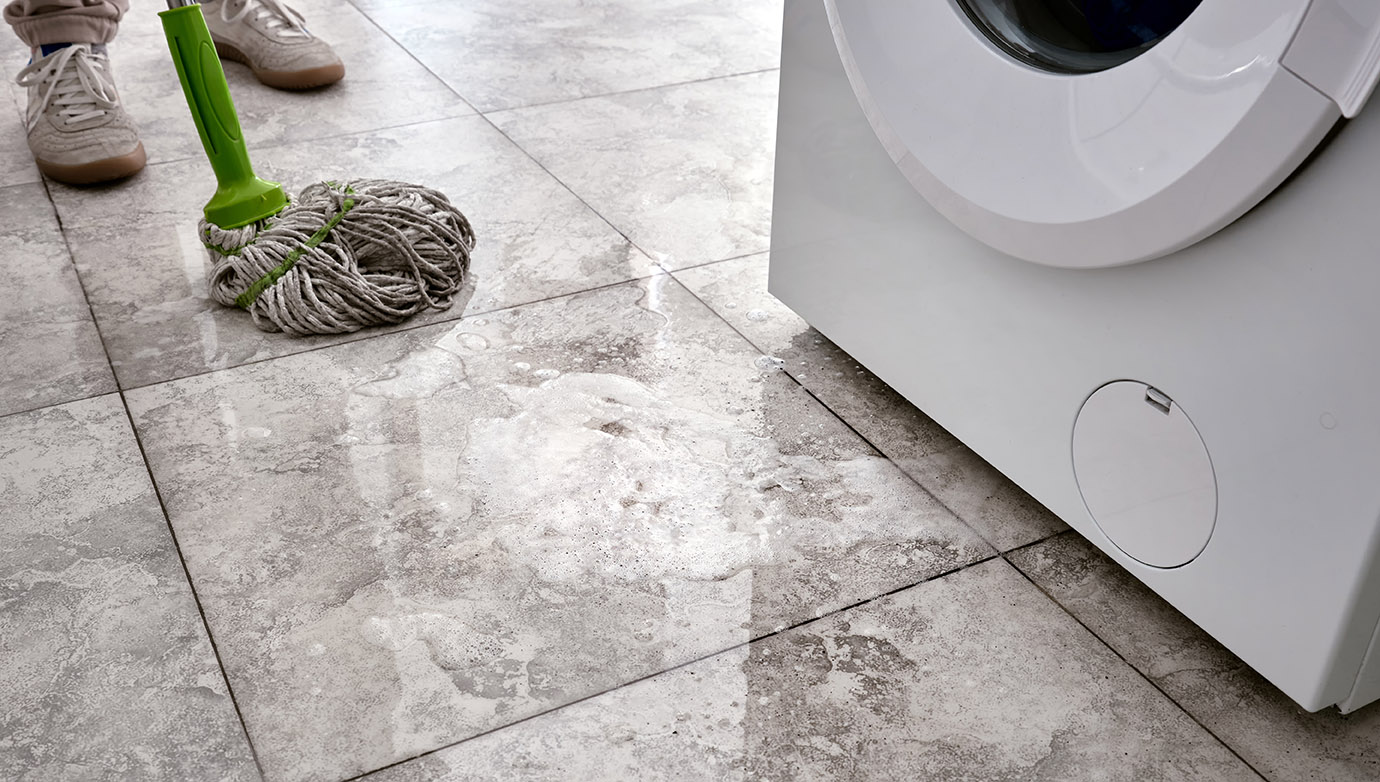
Since washer and dryer complaints often get lumped together simply because the machines sit side by side, it’s worth ruling out the washer specifically if you’re seeing water where it shouldn’t be. A washer that’s overfilling, has a failing door seal, or has a drain hose that’s come loose can send water toward a dryer sitting nearby and make the problem look like it’s coming from the wrong appliance. A clogged drain is one of the more common culprits behind washer-related water where it shouldn’t be, and our guide on a clogged drain from a washing machine covers how to tell if that’s what’s actually happening.
Simple Checks Before You Call for Help
Before assuming a full repair is needed, a few checks take only a few minutes and rule out the most common non-mechanical causes:
- For smell: wipe down the door gasket and detergent drawer, and check whether the drain filter (if your model has one) needs clearing.
- For a dryer leak: confirm the vent hose isn’t disconnected or crushed, and check whether a nearby washer is actually the source.
- For a dryer that won’t start: make sure the door is latching fully and check the breaker before assuming a part has failed.
- For heat loss: check the exterior vent cap for lint buildup, since a blocked vent is one of the most common and easiest-to-fix causes of a dryer that runs but doesn’t dry.
If those checks don’t resolve it, that’s the point where ABC’s appliance repair technicians can diagnose the actual part at fault rather than continuing to guess.
FAQ
Why does my washing machine smell bad?
Trapped moisture and detergent residue building up in the door gasket, dispenser drawer, or drain filter is the most common cause, especially on front-load models. See our dedicated guide on washing machine smell for the full breakdown and cleaning steps.
Why is my dryer not heating up?
A dryer that tumbles but produces no heat usually points to a failed heating element, a blown thermal fuse (often from a clogged vent), or a gas supply issue on gas models. Checking the exterior vent for lint buildup is a quick first step before assuming a part has failed.
Why is my dryer leaking water?
This depends heavily on the dryer type. Steam-cycle and some ventless models circulate water internally and can leak from a failed seal or clogged drain, while in a standard vented dryer the water is more often coming from a nearby washing machine or a venting issue. See our dedicated guide on dryer leaking water for the causes by dryer type.
A washer or dryer that’s smelling, leaking, or refusing to run is usually pointing to one specific, fixable cause rather than signaling the whole machine is done. If you’ve worked through the checks above and things still aren’t adding up, ABC’s Austin appliance repair team can diagnose the real issue and get your laundry room back in working order.