Choosing the right water softener size comes down to three factors:
- How many people are in your household
- How much water you use daily
- How hard your local water is
Getting the size wrong, too big or too small, can lead to wasted salt and water, higher utility bills and a shorter system lifespan.
When it comes to choosing a water softener, size matters. Your household size, daily water use and the hardness of your local water all play a role in what size water softener you need to install.
Plus, choosing the wrong size water softener can lead to several problems, including frequent regeneration cycles, inefficient salt usage and poor water softening performance.
Texas homeowners should keep in mind that Texas water is often hard, so choosing the right water softener is important. This guide covers everything you need to know.
Keep reading to learn how water softener sizing works, a simple calculation method to help you choose the right one, example sizes for Texas households and when you should call in a professional.
Additionally, this guide includes expert insights from Michael Marugo, Plumbing Operations Manager at ABC Home & Commercial Services. He has both his Journeyman Plumber and Master Plumber licenses, and has 32 years of mechanical experience.
What Does “Water Softener Size” Actually Mean?
According to Michael Marugo, water softener size is not measured by the size of the tank, but by grain capacity.
A water softener’s grain capacity measures how many hardness minerals the system can remove before regenerating.
Marugo explains, “You average 65 to 75 gallons per person in the household, and then you figure out what the actual hardness level of your water is. Let’s say your water is 10 grains hard. You would multiply that number by the number of people in the house, times how many gallons each person should be using, times the amount of hardness. And that will tell you that you have to remove 35,000 gallons of grains of hardness a day. You’re going to look for a softener that does 35,000 to 40,000 grains of hardness.”
Examples of water softener sizes include:
- 24,000 grain
- 32,000 grain
- 48,000 grain
- 64,000 grain
Why Water Softener Sizing Matters
When it comes to purchasing a water softener, it’s important not to get one that’s too big or too small.
Marugo explains, “While we are in Texas, bigger isn’t always better. If you have an oversized water softener, it’s not going to run often enough and it’s not going to clean itself often enough. If you have an undersized softener, it’s going to run way too hard, and it’s going to regenerate itself way too often, and you’re going to waste water, waste salt and wear out the machine twice as fast.”
The right size softener should regenerate about once every 7 to 10 days.
If the System Is Too Small
When your water softening system is too small, it regenerates too often and uses more salt. It will also have a reduced lifespan, leading to a costly replacement too soon. Plus, with a water softener that’s too small, it’s easy for hard water to slip through the system.
If the System Is Too Large
When your water softening system is too large, there are higher upfront costs and the system doesn’t regenerate efficiently. Larger systems also waste water, which can lead to a spike in your utility bills.
Step-by-Step: How to Calculate What Size Water Softener You Need
There’s a simple calculation you can use to determine what size water softener system is right for your household.
Step 1: Determine Your Household Water Usage
First, consider how many people live in your house and how much water they use. The average estimate is 75 gallons of water per person per day.
For example:
Estimated Daily Water Use by Household Size
Step 2: Test Your Water Hardness
The next step is to test your home’s water hardness, which is measured in grains per gallon (GPG).
Here are typical Texas ranges:
- Moderate: 7 to 10 GPG
- Hard: 11 to 20 GPG
- Very hard: 20 or more GPG
You can test your water hardness using home test kits, municipal water reports and professional water testing. You can use the map below from the USGS for a rough estimate of how hard your water is.
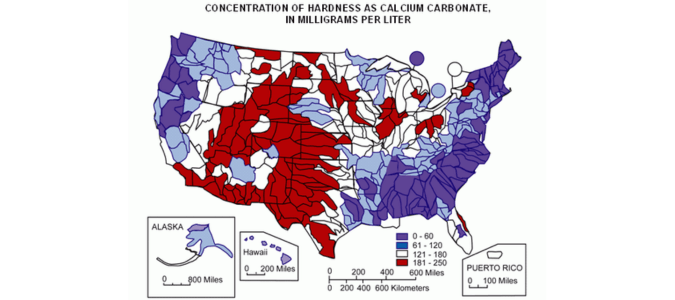
Source: USGS map of water hardness in United States
Disclaimer: ABC does not provide water testing services.
Step 3: Calculate Daily Softening Requirements
Using the numbers you calculated above in this formula:
Household Water Usage × Water Hardness = Daily Grain Removal Requirement
Here’s an example for a 4-person household:
- 4 people
- 75 gallons per person
- 15 GPG hardness
Calculation
4 × 75 = 300 gallons/day
300 × 15 = 4,500 grains per day
Step 4: Determine Weekly Softening Capacity
Lastly, you need to calculate your weekly softening needs. Most systems regenerate every 7 days. Using the numbers above, multiply the grains per day result by 7.
For example:
Calculation
4,500 grains/day × 7 days = 31,500 grain capacity
Recommended system: 32,000 grain water softener
Water Softener Size Chart for Typical Homes
Want to skip the calculations? Here’s a quick reference guide you can use instead. However, keep in mind that these are general estimates. A professional can provide the most accurate sizing.
Recommended Softener Size by Household Size and Water Hardness
Why Texas Homes Often Need Larger Water Softeners
If you’re a Texas homeowner thinking about skipping a water softener, it’s important to know why they’re so useful in our state.
Texas Has Some of the Hardest Water in the US
The high mineral content in Texas groundwater and limestone aquifers causes the Lone Star State to have very hard water. Softening your water can extend the lifespan of your appliances, lower your cleaning costs, protect your plumbing and more.
Larger Households Are Common
Most Texas homes have multiple bathrooms, large appliances and use water outdoors. For homes that use lots of water, installing a water softener can help reduce utility costs.
Hard Water Problems Are More Severe
In Texas, issues with white scale buildup and soap scum are more common due to the hard water. Additionally, the hard water can make your hair and skin dryer. It can also shorten the lifespan of your appliances.
Signs Your Water Softener Is the Wrong Size
According to Marugo, you can tell if your water softener is too large when:
- The water cycles between hard and soft
- The system doesn’t regenerate enough
You can tell it’s too small when:
- The water still feels hard
- Low water pressure
- Excessive salt usage
- Frequent regeneration

What Happens If You Don’t Install the Right Size Softener?
Leaving the wrong-sized water softener installed in your home can damage your appliances, reduce the efficiency of your water heater and cause plumbing scale to build up. It can also raise your monthly bills.
Should You Size a Water Softener Yourself or Hire a Professional?
There are pros and cons to sizing a water softener yourself versus hiring a professional. For the most part, doing it yourself only works when you know your household size, get the hardness of your water tested and understand your typical water usage.
In many cases, it’s best to work with a professional, including when:
- You have a well water system
- You know your home has iron contamination
- Your home is large
- You experience variable water pressure
When to Call a Water Treatment Professional
For the best results, work with a water treatment professional. They’ll guarantee that the right-sized water softening system is installed in your home.
Working with a pro is especially encouraged if you have very hard water, existing plumbing issues, iron or sulfur in your water or you’re planning a whole home water treatment.
Frequently Asked Questions
What Happens if a Water Softener Is Too Small?
Can a Water Softener Be Too Large?
How Long Should a Water Softener Last?
Install the Right Water Softener With Professional Help
Determining the proper water softener size for your home depends on your household size, water usage and hardness levels. Most Texas homeowners need larger water softeners due to the hard water in the Lone Star State.
For more assistance, reach out to a local plumbing professional.
ABC Home & Commercial Services has a team of TCEQ-licensed specialists with a combined 125 years of experience. We will ensure you are happy with the water quality in your home!