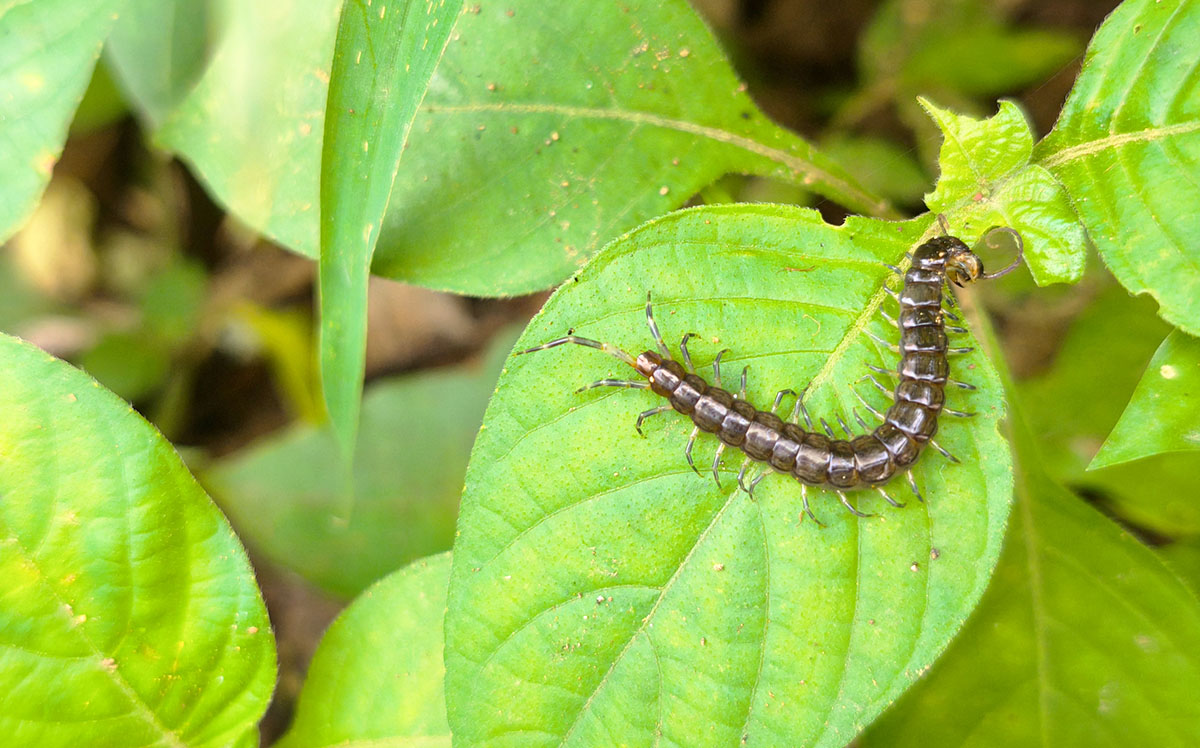
A centipede crosses the bathroom floor late at night, moves fast, and vanishes under the baseboard before anyone gets a real look at it. That’s usually where the questions start. House centipedes and crickets are two of the most common “what is this and should I worry” pests homeowners run into. Centipedes hunt. Crickets chirp. Neither one is out to get you. And they’re rarely as concerning as they look. If either one keeps showing up no matter what you try, a Houston pest control inspection can usually find what’s actually drawing them in. Centipedes are hunters that feed on other household bugs. A bite is possible, but it’s uncommon and not medically significant for most people. Crickets don’t bite people at all, but they can chew through natural fibers. And in numbers, they cause a nuisance chirping problem once they’re indoors. Both usually show up for the same underlying reason: moisture and an easy way inside.
The Centipede Question, Briefly
If you’ve found a house centipede and your main question is whether it’s actually dangerous, we’ve covered that in detail in a dedicated guide: Centipedes in Texas: dangerous or nothing to worry about? Centipedes have a dozen or more legs and absolutely no interest in you personally. The short version: house centipedes are far more interested in staying out of sight than in encountering a person. Their presence is often actually a signal that another pest problem exists, since centipedes are hunting something. Dealing with the Florida house centipede specifically? Trying to tell a centipede apart from a similar-looking millipede? We’ve got dedicated guides for those too: Florida centipedes and centipedes vs. millipedes. Want the full rundown on venom and bite risk? See are centipedes poisonous? Texas A&M AgriLife’s centipede resources are a solid independent reference alongside our own guides.
What’s more useful here is looking at crickets, since that half of the question gets a lot less attention. And what the two pests together usually mean about your house.
Do House Crickets Cause Any Real Damage?
Crickets aren’t a threat to people. They don’t bite. They don’t carry disease in any way that matters to a household. The worst most people experience is getting startled by one jumping out from behind a box. That said, crickets aren’t entirely harmless to your belongings. Certain species, most notably camel crickets and field crickets, will chew on paper, cardboard, and natural fabrics if food is otherwise scarce. In a garage, attic, or closet where crickets have settled in for a while, that can mean small holes in stored clothing or damaged cardboard boxes.
The bigger complaint most homeowners have with crickets is the noise. A single cricket chirping at night from somewhere inside a wall or under an appliance can be surprisingly hard to locate. And genuinely disruptive to sleep. That chirping is male crickets calling for mates. One cricket getting inside rarely stays a solved problem for long, since more will follow the same access points if conditions stay favorable.
Why Am I Suddenly Seeing Centipedes or Crickets Indoors?
Both pests tend to show up indoors for overlapping reasons. That’s part of why they’re often lumped together in the same “what’s this bug” conversation. This is home ground for both of them, too — Houston’s humidity and mild winters mean the shelter-seeking season for crickets barely closes, and centipedes never really run out of damp corners to choose from.
Moisture is the biggest driver for centipedes. House centipedes are drawn to damp, dark spaces: bathrooms, basements, crawl spaces, and areas under sinks where a slow leak has kept things humid. Since centipedes are actively hunting other insects, seeing more of them can mean there’s a food source supporting them. Silverfish, spiders, roaches. Worth paying attention to on its own.
Temperature changes drive crickets indoors. Crickets are outdoor insects by nature. But a sudden cold front, or an especially hot, dry stretch, will push them toward the shelter, warmth, and moisture a house provides. Outdoor lighting near entry points also draws crickets closer to the house at night, which increases the odds a few end up inside.
Both share the same entry points. Gaps under exterior doors. Unsealed weep holes. Vents without proper screening. Cracks around foundation and utility penetrations. Homes with a lot of ground-level clutter, stacked firewood, or dense mulch beds right against the foundation tend to see more of both. That landscaping provides the exact moist, sheltered conditions each pest prefers just outside the wall.
What Actually Helps Reduce Both
Because centipedes and crickets are drawn indoors by similar conditions, addressing the shared causes tends to help with both at once. Even though they’re unrelated species.
Start outside the house. Move firewood, mulch, and dense plantings a few feet away from the foundation. That reduces the sheltered, moist habitat both pests favor right at the perimeter. Keep gutters clear and grade soil so water drains away from the foundation. That cuts down on the excess moisture that draws centipedes in particular.
Then work on entry points. Weatherstripping under exterior doors. Screening on foundation vents and weep holes. Sealing visible gaps around pipes or cables. All of it closes off the paths both pests use to get inside.
Inside, reduce moisture in bathrooms, basements, and under sinks. Fix slow leaks. Run a dehumidifier in consistently damp areas. That makes the house less appealing to centipedes specifically, since moisture is their primary draw. For crickets, store cardboard boxes and natural-fiber items off the floor in garages and attics. That limits the food sources keeping an indoor population going once a few get inside. It’s much easier to address early, before either pest has had a season to settle in. Texas A&M AgriLife Extension is a good independent reference for the broader moisture- and landscaping-management practices that help with both pests at the perimeter.
If you’re seeing either pest regularly despite addressing the obvious causes, that’s usually a sign there’s an ongoing entry point or moisture source that hasn’t been found yet. It may be worth having someone take a closer look at the property from the outside in.
FAQ
Are house centipedes dangerous to have around?
Not in any way that matters for most households. House centipedes can bite if handled directly, but it’s uncommon and typically no worse than a minor bee sting for people without an allergy. For the full picture on centipede risk in Texas specifically, see our dedicated guide: Centipedes in Texas: dangerous or nothing to worry about?
Do crickets in the house cause any damage?
Crickets don’t bite or carry disease. But certain species will chew on paper, cardboard, and natural fabrics if left undisturbed for a while. That can mean small holes in stored clothing or damaged boxes in a garage or attic. The more common complaint is the chirping noise from a cricket that’s found its way into a wall or under an appliance.
Why am I suddenly seeing centipedes or crickets indoors?
Both are usually responding to the same conditions: excess moisture, favorable outdoor temperatures pushing them toward shelter, and easy entry points around doors, vents, and foundation gaps. Landscaping features like mulch beds or firewood stacked against the house tend to make both pests more common nearby.
Centipedes and crickets are more of an unwelcome surprise than a serious threat. But either one showing up regularly is worth paying attention to, since it usually points to something specific drawing them in. A family-owned team that’s worked Houston since 1949 has seen both often enough to know exactly where to look. Call (281) 730-9500 before 1pm Monday through Friday for same-day service. ABC’s Houston pest control team can walk the property with you and help close off the access points for good.