When your Christmas lights aren’t working, common causes include power source issues, loose or burned-out bulbs, blown fuses, damaged wiring or weather-related damage. Start with simple troubleshooting, but for more complex repairs, it’s better to call in an electrician.
Nothing welcomes in the holiday season more than hanging Christmas lights. After all that hard work, you step back to relish in your accomplishment and bask in the sparkly glow. Only problem: the lights aren’t turning on.
When your Christmas lights aren’t working, the solution could be as simple as a loose bulb or as complex as an overloaded electrical circuit.
This guide explains all the possibilities so you can get back to celebrating the holidays. You’ll learn the most common causes of Christmas lights not working, how to troubleshoot and when to call a professional.
Why Are My Christmas Lights Not Working?
Christmas lights not working? The issue usually falls into one of these four categories:
- Power source issues
- Bulb or strand damage
- Fuse failures
- Weather or electrical damage
Keep reading for a deep dive into each issue.
Start With the Power Source
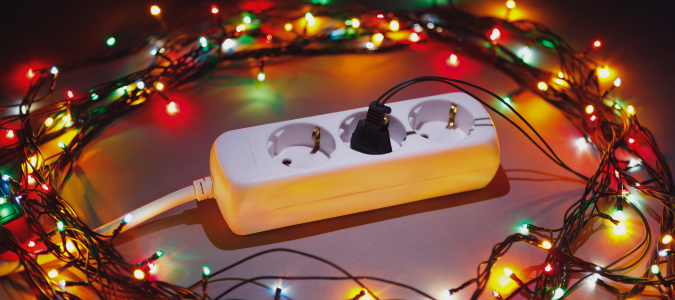
Follow this simple checklist to determine if the power source is the cause of your Christmas lights not working.
Step One: Make Sure the Outlet Has Power
Unplug the Christmas lights and plug another device into the same outlet to test if it’s working or not. Check GFCI outlets by pressing the “test” button, which should cause the “reset” button to pop out. Press the reset button and try the lights again.
If those solutions don’t work, check to see if any breakers tripped and reset them at the breaker box.
For outdoor lights, use a GFCI outlet tester or a small lamp to test the outdoor outlet. The tester will verify if the outlet is working and the small lamp will light up if the outlet is working. If the outdoor outlets fail the test, check for a tripped breaker or safety switch.
Step Two: Check the Circuit Breaker
It’s not uncommon for holiday displays to overload an electrical circuit. To check for a tripped breaker, open your electrical box and look for a switch that’s stuck, or “floating,” in the middle rather than toggled to fully “on” or “off.” The breaker may also have a visible red or orange indicator flag on.
To safely reset a tripped breaker, push the switch firmly to the “off” position and then switch it back to “on.” Make sure you have completely dry hands when you do this.
Inspect the Christmas Light Strand
If the problem isn’t with your power source, it could be the Christmas light strand. Damage, loose or missing bulbs may be the culprit.
Step One: Look for Loose or Missing Bulbs
Did you know that one missing bulb can disable older incandescent strings? Inspect your string of lights for missing or loose bulbs and replace or tighten them. Keep in mind that LED strands vary by manufacturer, so read the instructions provided by the manufacturer to learn how to deal with loose or missing bulbs.
Step Two: Check for Burned-Out Bulbs
A burnt-out bulb may be impacting your entire strand of lights. Start by looking for blackened bulbs or broken filaments inside the bulbs. Cracked bulbs may have allowed moisture to enter and burn them out.
Follow the manufacturer’s instructions to properly replace burned-out bulbs.
Step Three: Look for Damaged Wires
Next, check for damaged or exposed wiring. Examples include:
- Frayed insulation
- Pinched wires
- Animal damage
- Lawn equipment damage
- Heat damage
If you spot damaged wiring on your light strand, don’t use it or attempt to repair it yourself. Carefully discard the strand and replace it with a new one to avoid an electrical fire.
Check the Fuse Inside the Plug
If your Christmas lights still aren’t working after checking the power source and bulbs, the next step is to check for a blown fuse inside the plug. Many Christmas light strands have replaceable mini fuses that protect against electrical overloads.
The fuse compartment is usually located behind a small sliding cover on the plug. If you still have the packaging that the lights came in, the manufacturer’s instructions will show you where it’s located and how to replace the mini fuse.
Otherwise, follow these instructions to replace a Christmas light fuse:
- Unplug the lights before getting started
- Slide open the fuse cover
- Carefully remove the fuse
- Compare the rating of the old fuse to make sure the new fuse matches it
- Replace the old fuse with the new one
- Test the lights again
Why Did Half of My Christmas Lights Stop Working?
When your entire strand of Christmas lights won’t turn on, the causes are fairly straight forward. However, things get a bit more complicated when only half of the Christmas lights stop working.
For older, incandescent light strands, the issue may be shunt failure. Each bulb has a small shunt that keeps electricity flowing through the circuit if the bulb’s filament burns out. When the shunt fails, the current stops flowing through that part of the strand.
Next, a loose bulb could be interrupting the circuit and causing a whole section of the strands to go dark. When the lights are turned off, check each bulb to make sure it’s properly screwed into the strand.
Lastly, a broken wire within the strand could impact a large section of the lights. If you notice damaged or exposed wiring, replace the entire strand.
Why LED Christmas Lights Stop Working
What’s the difference between incandescent Christmas lights and LED Christmas lights? Incandescent lights rely on heated filaments. LED lights use light-emitting diodes and electrical components to regulate the power flowing through the lights.
LED lights have internal drivers, which are small electrical components that convert and regulate electrical currents. When drivers fail, a whole section of the lights go dark.
Next, individual LEDs, also called diodes, can become damaged or fail, causing one or more lights to stop working.
While outdoor LED lights are designed to withstand the elements, they can still get damaged by water intrusion. Moisture can interfere with the electrical components and cause multiple lights to fail.
Lastly, all LED light strands are manufactured differently. Some are designed so that one failed LED affects only that bulb, while others may have sections that go dark when a component fails. Make sure you check the instructions before you try to repair LED Christmas lights.
Use the following table to help determine the difference between incandescent and LED light failures.
Common Outdoor Christmas Light Problems in Texas
No matter where you live, it’s normal for Christmas lights to stop working. However, Texas homeowners should consider the following situations that make it more likely to happen.
Moisture
Around the holidays, many parts of Texas experience winter rainfall, morning dew and condensation. These conditions make it easy for moisture to get into your Christmas light bulbs and cause the strand to fail.
Wind
Excess wind can loosen Christmas light connections, pull on the plugs and cause breakage. Carefully inspect your lights for damage after a heavy wind event.
Animals
Squirrels, birds and rodents that like to chew wires can all cause damage to your Christmas lights.
Sun Exposure
Even during the winter, Texas gets plenty of sun. The UV rays can damage light strands, especially ones that are older.
How to Safely Troubleshoot Christmas Lights
Before you attempt to troubleshoot your Christmas lights, make sure they are fully unplugged. Follow these safety measures to do it the right way:
- Always unplug first
- Never repair exposed wiring with household tape
- Keep connections off wet ground
- Use outdoor-rated extension cords
- Replace damaged strands
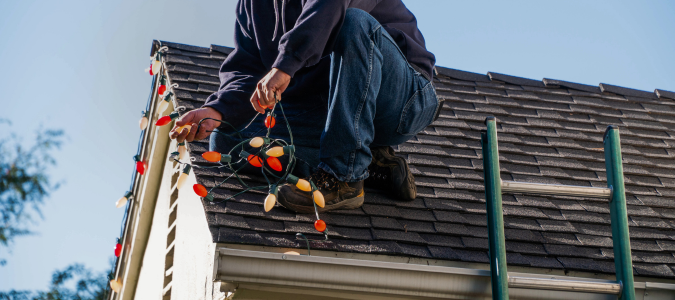
- Avoid ladder work in wet conditions
When Should You Replace Christmas Lights Instead of Repairing Them?
If multiple sections of your Christmas lights are failing, replacing them is more time and cost effective than repairing them.
Other instances when it’s better to replace Christmas lights than repair them include:
- When the wires are damaged
- If water entered the sockets
- Your lights are more than a few years old
- The repairs exceed replacement cost
If you’re torn between replacing and repairing your lights, consider their age. LED lights are designed to last from 15,000 to 50,000 hours, or around 10 years of use. Incandescent lights, on the other hand, only last for 750 to 1,000 hours, or for about a month of use.
FAQs
Why are my Christmas lights not working even after replacing the fuse?
Can one bad bulb make the whole strand stop working?
Why is only half my Christmas light strand working?
Can rain ruin Christmas lights?
How do I know if my Christmas light strand needs replacing?
Is it safe to use electrical tape on damaged Christmas lights?
Turn the Lights Back on With Professional Help
If your Christmas lights stop working, start with the simplest troubleshooting steps, such as checking the power source and inspecting the strand for loose or damaged bulbs. Keep in mind that prioritizing electrical safety is more important than a temporary fix.
If electrical issues persist or you’re installing a large display, ABC Home & Commercial Service’s professional assistance can help ensure a safe, reliable holiday lighting setup.
