A bag of flour sits untouched on the shelf for weeks. Then something in it moves, and it’s suddenly the only thing in the kitchen anyone’s looking at. That’s usually how a pantry beetle problem gets discovered in a Texas kitchen. Small beetles turning up around flour, rice, cereal, or pet food are almost always pantry beetles. They’re not the wood-boring beetles that damage structural lumber. The two groups look similar at a glance. But they come from different sources and call for different next steps. If you want a second set of eyes, our Houston pest control team can help you sort out which one you’re dealing with. Here’s how to tell for yourself first, and where to look once you know.
What a Pantry Beetle Actually Looks Like
“Pantry beetle” is really shorthand for a handful of small, dry-food pests that show up in stored goods, not in wood. Houston keeps a steady supply of things with more legs than most people want in a kitchen, and pantry beetles are one of the more forgivable ones — they’re after the food, not anybody in the room. Most are reddish-brown to dark brown, somewhere between the size of a grain of rice and a sesame seed. You’ll usually find them in clusters near an open or recently opened food package, not one at a time near a windowsill. Texas A&M AgriLife’s stored-product pest identification resources are a good independent reference if you want to confirm any of the species below.
A few specific insects make up most of the calls we get.
Weevils have a distinctive elongated snout. They show up almost always in or around whole grains, rice, or dried beans. If you’re seeing small dark beetles with what looks like a tiny curved nose, our weevil guide walks through exactly what to check next.
Cigarette beetles are smaller, rounder, and more of a generalist. They turn up in cereal, spices, pet food, and even dried flower arrangements. Our cigarette beetle page covers their full life cycle and where they tend to hide between meals.
Flour beetles are flatter and more reddish. They’re the ones most likely to show up in a bag of flour or cornmeal that’s been sitting a while. See our flour bugs guide for a closer look at identifying them specifically.
Grain mites are a fourth look-alike worth knowing about, even though they aren’t technically beetles. They’re pale, almost dust-like, and move in a way that can make a package of flour or oats look “alive” when you tilt it under light. People describe them the same way they’d describe a beetle infestation, so they get lumped into the same conversation. Our grain mite page explains what sets them apart and why the response is a little different.
Signs You’re Looking at a Pantry Beetle, Not Something Else
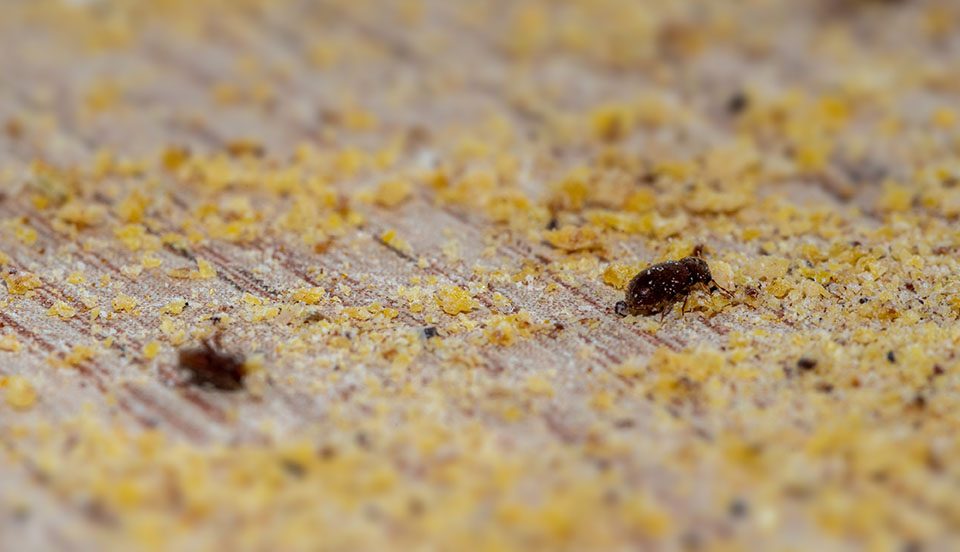
A few quick checks help narrow things down before you start pulling every box off the shelf. Pantry beetles show up in or right next to dry food packaging, not on baseboards, windowsills, or near exterior doors. They don’t usually show up alone. Are you seeing several at once, or a cluster of small holes chewed through a cardboard box or bag? That’s a strong sign of an active food-source infestation, not just one insect that wandered in from outside.
It also helps to think about timing. Pantry pests usually get introduced through an already-infested product. That could be a bag of birdseed, a box of pasta, or dried pet treats bought weeks earlier. If the beetles seem to be radiating out from one specific shelf or cabinet, rather than the whole kitchen, that’s a good clue you’re closer to the source than you think.
How to Trace Which Package They Came From
Once you’ve confirmed pantry beetles, the next step is figuring out which product brought them in. Treating the room without finding the source just means a repeat problem later.
Start with anything made from grain, dried fruit, nuts, spices, or pet food, especially items that have been open for more than a few weeks. Check the inside seams of boxes and bags, not just the contents. Eggs and larvae are often tucked into folds or corners, rather than sitting loose in the food itself. A flashlight held at an angle across the surface of rice or flour will often show small holes, webbing, or clumping that isn’t visible under normal kitchen lighting.
If more than one package shows activity, check whether they were stored near each other. Pantry beetles move easily between adjacent containers, especially anything not sealed tightly. It’s also worth checking pet food storage separately from human food. Bagged pet food is one of the most common sources homeowners overlook entirely.
How Pantry Beetles Differ From Wood-Boring Beetles
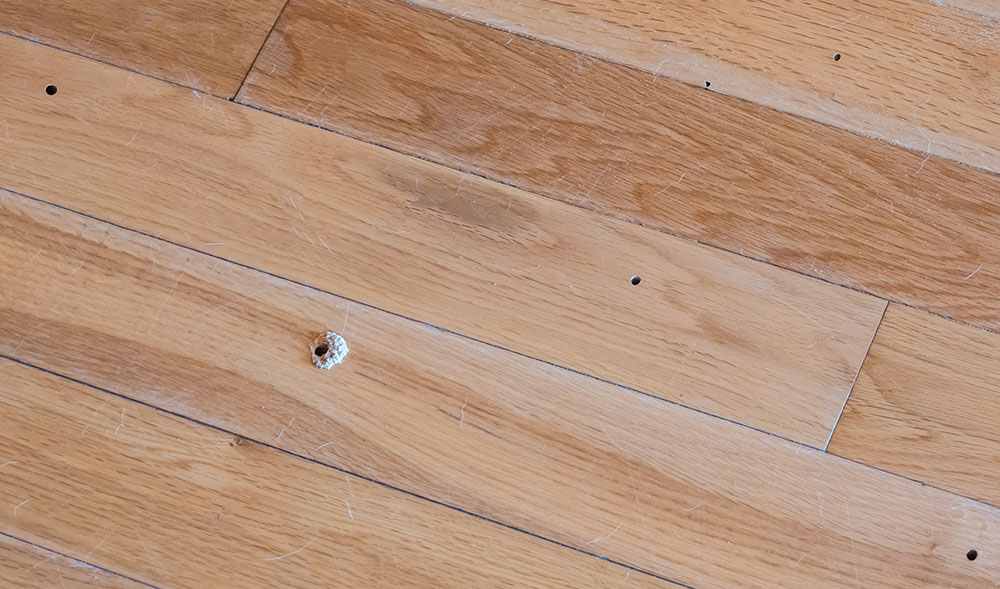
It’s easy to see “beetle” and assume the worst about structural damage. Pantry beetles come from food. Wood-boring beetles come from wood. Different sources, different risk — and that’s the split worth remembering before either turns into the wrong kind of worry. Wood-boring beetles target structural lumber, furniture, and other wood products. They leave small round exit holes and fine, sawdust-like frass, rather than showing up around food. If what you’re seeing is near exposed wood, framing, or furniture, rather than a kitchen shelf, that’s a meaningfully different situation. Our dedicated guide to wood-boring beetles and the risks they pose to a home covers the identification and structural side in full. AgriLife’s beetle fact sheets are a useful side-by-side reference if you want outside confirmation before deciding which category you’re actually looking at.
The short version for comparison purposes: pantry beetles are a food-storage issue, usually resolved by identifying and removing the source. Wood-boring beetle activity is worth a closer structural look, given what’s at stake for the wood itself. Don’t assume you’re dealing with one just because you’ve read about the other. Check where the activity actually is before deciding which guide applies.
Do Pantry Beetles Spread to Other Rooms in the House?
Pantry beetles can move beyond the kitchen, but they generally follow food rather than spreading at random. A common pattern: an infested product gets moved to a pantry closet, a garage shelf, or even a home office snack drawer, and the beetles follow it there.
So checking every room where dry food or pet food is stored matters, not just the kitchen. A garage full of birdseed, or a hall closet with backup pantry stock, can quietly sustain an infestation long after the kitchen itself looks clear. That’s part of why these problems sometimes seem to “come back,” even after a thorough kitchen cleanout.
What to Do Once You’ve Found an Infested Package
Once you’ve identified an infested item, seal it in a bag before moving it. That way beetles or eggs don’t scatter across counters or other shelves on the way to the trash. Take everything else off that shelf and check it individually. Don’t assume nearby packages are clean just because they look untouched.
Vacuuming the shelf, including cracks and corners, removes loose eggs and larvae that wiped surfaces can miss. Going forward, store dry goods in sealed glass or hard plastic containers, rather than the original bag or box. It’s one of the most effective habits for keeping any future activity from spreading between products.
When to Bring in a Professional
Most single-package pantry beetle situations resolve with the steps above. It’s worth bringing in a trained technician in three cases: the activity keeps recurring across multiple products after a cleanout, you can’t identify the source package, or what you’re seeing doesn’t clearly match the pantry-beetle pattern described here. That’s when a closer, trained look at the whole kitchen and adjoining storage areas pays off. ABC’s been family owned in Houston since 1949, and three generations of technicians have seen just about every version of “what is this in my pantry.” If you’ve already cleaned out the pantry twice and something is still turning up, ABC’s Houston pest control team can trace the source and check storage areas a kitchen-level cleanout wouldn’t reach on its own.
FAQ
What does a pantry beetle look like?
Most pantry beetles are small, reddish-brown to dark brown insects, roughly the size of a grain of rice or smaller, found in or right next to dry food packaging. Weevils have a distinct elongated snout, cigarette beetles are rounder and more generalist, and flour beetles run flatter and more reddish. The shared trait across all of them is that they show up near food, not near windows or exterior doors.
How do I tell which food package pantry beetles came from?
Check anything grain-, spice-, or pet-food-based that’s been open more than a few weeks, and look inside the seams and folds of the packaging, not just the contents. A flashlight held at an angle across rice or flour often reveals small holes, webbing, or clumping that’s hard to spot under regular kitchen lighting, and checking packages stored near each other helps you catch any spread before it’s obvious.
Do pantry beetles spread to other rooms in the house?
They can, but they generally follow food rather than spreading randomly, so a bag of birdseed in the garage or backup pantry stock in a hall closet can sustain activity even after the kitchen looks clear. Checking every room where dry food or pet food is stored is the most reliable way to catch that before it becomes a repeat problem.
Once you’ve narrowed down what you’re actually dealing with, a trained technician can confirm the source, check storage areas you might not think to look at, and help you get rid of it for good. If you’re in the Houston area, call (281) 730-9500 for a second set of eyes. Same-day service is available on calls placed before 1pm, Monday through Friday, or you can reach out through ABC’s Houston pest control team page.