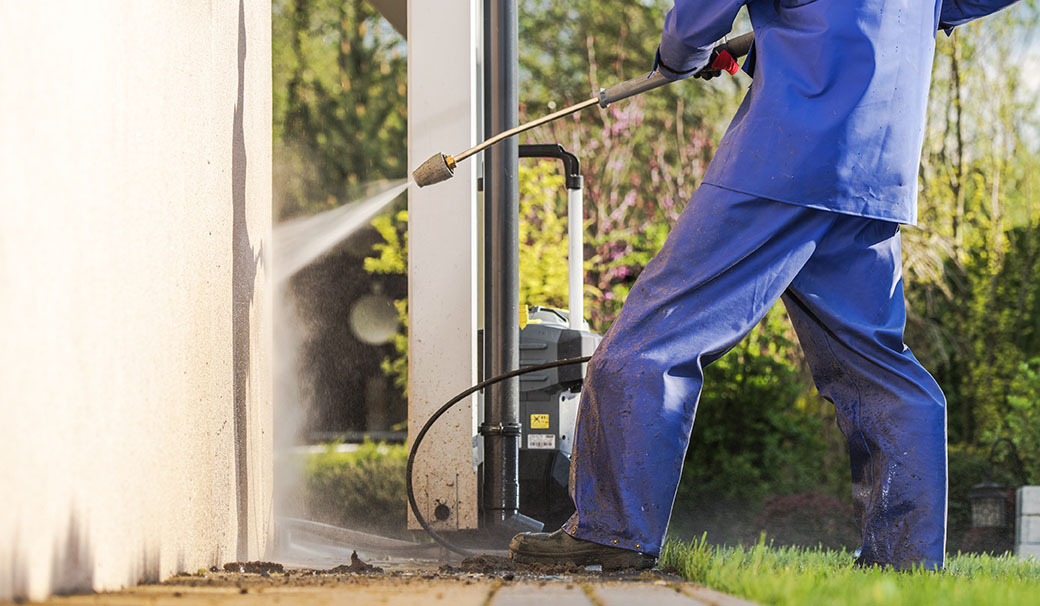
A Saturday morning, a rented pressure washer, and good intentions — that’s how a lot of exterior cleaning projects start in Texas, and it’s also how a lot of them go sideways. Pressure washing works well on most exterior surfaces. But the pressure level and technique have to match the material, or it can strip paint, split wood grain, or push water behind siding it was never meant to get behind. Most Texas homes do well with a full exterior wash once or twice a year. The right interval depends on the material, and on how much shade, humidity, and pollen the surface deals with. Here’s how to match the approach to what you actually have.
What Different Siding and Decking Materials Can Handle
Not every exterior surface tolerates the same amount of force, and that’s really the whole issue. Vinyl siding holds up reasonably well to a moderate stream. But aim it upward, or hold the nozzle too close, and you can force water up under the panels, where it has nowhere to go and no way to dry out quickly. Fiber cement and stucco tend to tolerate more pressure than vinyl. Still, they’re not forgiving of a tight, close-range spray pattern that concentrates force on one spot too long.
Wood decking is the material that gets damaged most often. Wood grain is directional, and a high-pressure stream held at the wrong angle tears into softer growth rings. That leaves the surface fuzzy, splintered, or visibly etched. Once that happens, a coat of stain won’t fix it. The wood itself has been physically altered. Painted wood siding carries a similar risk. Older or already-weathered paint can lift off in sheets under too much force, which is more work to repair than the cleaning was meant to save.
“Pressure washing” was never really one setting. It’s a range of pressure, nozzle angle, and distance, adjusted for the specific surface in front of you. That’s exactly why a lower-pressure approach exists for the more delicate materials.
Soft Washing vs. Pressure Washing: Why the Difference Matters
Soft washing uses a lower-pressure stream combined with a cleaning solution that does more of the actual work. It lets the water rinse rather than blast the surface clean. It’s the better fit for painted wood, older siding, roofing, and anything where the surface itself, not just the dirt on it, could be damaged by force. Pressure washing, at higher PSI, is generally reserved for surfaces built to take it, like concrete, brick, and some fiber cement products.
Confusing the two is one of the more common reasons a homeowner ends up unhappy with an exterior wash. Our comparison of power washing and pressure washing breaks down the terminology and technique differences, if you want the fuller picture before deciding which one your project actually calls for.
How Often Should You Pressure Wash Your House?
For most Texas homes, an annual or twice-yearly exterior wash keeps things from getting ahead of you. Humidity, pollen, and shade all speed up the buildup of algae, mildew streaking, and general grime. A property with heavy tree cover, or a north-facing wall that stays damp longer than the rest of the house, will often need attention more often than a fully sun-exposed one.
Rather than working off a fixed calendar date, it’s more useful to watch the surface itself. A few signs say cleaning is due, no matter how many months it’s been since the last wash: streaking that starts near gutters and roof edges, a greenish tint on siding that stays shaded most of the day, or a deck that feels slightly slick even when dry. Those are all signs that biological growth has taken hold. The EPA’s outdoor water-use guidance is a useful outside reference for thinking about exterior water use generally, including the cleaning schedules that tend to accompany it.
Here’s the thing about Texas humidity: it does most of the work. A Houston or Gulf Coast property with heavy shade and little airflow can grow a visible algae film in a fraction of the time it would take on a drier, more exposed lot further inland. This is home ground for a lot of us, and the maintenance rhythm here just runs tighter than it does somewhere drier. That’s part of why a fixed twice-a-year calendar doesn’t serve every property equally well.
Signs Your Siding or Deck Needs Cleaning Now
A few specific signs are worth acting on, rather than waiting for a seasonal reminder. Dark or greenish streaking on siding, especially concentrated under roof lines or downspouts, usually points to algae or mildew that will keep spreading the longer it sits. A deck surface that looks discolored in blotches, or that feels gritty or slick underfoot, has likely built up a layer of organic growth that a simple rinse with a garden hose won’t remove.
It’s also worth checking after storm season. Wind-driven debris, pollen, and standing water around the base of siding or decking can leave residue that sets in faster than normal seasonal grime. Wait too long, and the fix gets bigger. Catch it early, and it stays a cleaning job instead of a restoration project. Once staining has set into a material that punishes the wrong pressure or angle, like painted wood siding or a weathered deck, that’s usually the point where a trained crew is worth bringing in, rather than a rented machine and a guess.
What About Concrete Driveways and Walkways?
Concrete and other hardscapes generally tolerate more pressure than siding or decking. But they’re not immune to damage either, particularly with older or already-cracked concrete. If your main concern is a driveway, patio, or walkway rather than the house itself, our dedicated look at whether power washing can damage concrete covers that specific surface. Its pressure tolerance and failure points are different from siding or wood.
How Long Does an Exterior Wash Actually Take?
So how long does it actually take? The time a full exterior wash takes depends on the size of the home, the number of stories, and how much buildup has accumulated since the last cleaning. A single-story home with routine annual maintenance moves through noticeably faster than a two-story house that’s gone several years without attention. If you’re trying to plan around a weekend or a scheduling window, our breakdown of how long a house typically takes to pressure wash gives a more specific sense of what to expect.
Getting the Technique Right on Siding
Even with the right pressure setting, technique still matters. Work in overlapping passes from the top down. Keep the nozzle moving rather than holding it in place. Maintain a consistent distance from the surface. All of that reduces the risk of streaking or uneven cleaning. For siding specifically, our step-by-step guide to power washing siding walks through the details that separate an even, well-cleaned result from a patchy one.
FAQ
Can pressure washing damage siding or decking?
Yes, if the pressure or nozzle angle doesn’t match the material. Vinyl siding can let water push up behind panels, wood decking can splinter or tear along the grain, and painted surfaces can lift if the paint is already weathered. Matching the approach, including using a lower-pressure soft wash where the surface calls for it, is what keeps the cleaning from becoming the damage.
How often should I pressure wash my house?
Most Texas homes do well with an exterior wash once or twice a year, though shaded areas, heavy tree cover, and higher humidity all speed up the buildup of algae and mildew. Watching for visible streaking or discoloration is a more reliable signal than sticking to a fixed schedule.
Is soft washing different from pressure washing?
Yes. Soft washing uses lower pressure with a cleaning solution that does more of the work, which is generally the better choice for painted wood, older siding, and roofing. Pressure washing at higher PSI is typically reserved for surfaces built to take more force, like concrete and brick.
Matching the right pressure, technique, and cleaning frequency to your siding, decking, and hardscapes takes some judgment. It’s easy to get wrong with a rented machine and a weekend to spare. A family-owned crew that’s been reading Houston exteriors since 1949 knows the difference at a glance. If you’re in the Houston area, call (281) 730-9500 to bring in a trained crew that knows what each surface can take, or reach ABC’s Houston exterior cleaning team directly.