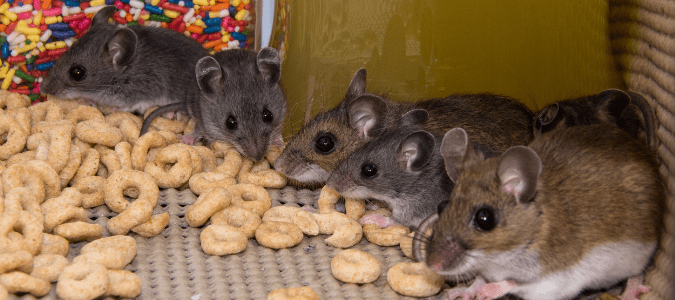
House mice will eat almost any food they can find, from pantry items and pet food to birdseed and garbage. Since they can survive on very little, just removing food usually isn’t enough to treat an infestation. Sealing up entry points, storing food properly and calling in professional pest control are the best ways to get rid of house mice.
Ever opened your pantry to find distinctive gnaw marks on boxes and bags? Mice are opportunistic omnivores who will eat plants, meat and just about anything else. Simply removing food from problem areas often doesn’t solve a rodent problem.
Take a closer look at what and how often mice eat, which foods attract them the most, how to prevent an infestation and when professional rodent control is the right move.
What Do House Mice Actually Eat?
The quick answer to the common question, “What do house mice eat?” is that these opportunistic feeders aren’t picky. They’ll go for any food source available to them, including:
- High-fat foods
- Sweet foods
- Grain-based foods
- Pet food
- Garbage and compost
Without effective prevention, any of these foods could attract mice to your home and provide them with enough energy to thrive and reproduce.
Foods Mice Commonly Eat Indoors
Common foods that mice will seek inside homes include these:
- Cereals
- Bread
- Rice
- Pasta
- Crackers
- Flour
- Oats
- Seeds
- Nuts
- Peanut butter
- Chocolate
- Candy
- Fruits
- Vegetables
- Pet food
- Birdseed
- Insects
- Grease residue
- Food crumbs
Mice look for foods high in carbohydrates and fats to provide quick energy. Calorie-dense foods like peanut butter and grease are very attractive to mice, as are pet foods and birdseed.
High-Fat Foods
Because high-fat foods contain more calories per gram than carbohydrates or protein, they’re very energy-dense. This means even a small amount of peanut butter, bacon grease and butter provides a lot of energy. While it’s a myth that cheese is the favorite food of mice, it also falls under this category.
Sweet Foods
Sweet foods rich in sugar are another excellent food source for mice. Residue from cookies, chocolate and syrup can attract them. Candy and dried fruit are also prime examples and shouldn’t be left out in the open.
Grain-Based Foods
Grain-based foods are similar to the natural diet of mice, so they’re often some of the most damaged pantry items. Storing rice, flour, oats, cereal, pasta and bread in sealed containers is essential to stop them from attracting mice.
Pet Food
Dog food, cat food, birdseed and chicken feed are all dense in calories and nutrients, providing an ideal food source. What makes them so alluring for mice is that they are often stored in easily accessible areas, like overnight feeding bowls.
Garbage and Compost
Even small amounts of food scraps in your garbage can attract mice due to their sense of smell. Any overflowing trash, outdoor bins or compost piles can draw them in as well. It’s best to keep garbage and compost either sealed or far from your home.
Reminder: Mice can get by even on tiny crumbs left under appliances or inside cabinets, which provide enough calories to last for days.

What Do Mice Eat in the Wild Versus Inside Homes?
Mice will eat any food they can find, both indoors and out. Outdoors, though, food sources are often scarce, so mice have to be resourceful, tracking down seeds, plants and even insects to survive.
However, large amounts of food are easier to come by in your pantry. Here are some common examples of what mice eat in nature and in your home.
When there’s a reliable food source, mice will make nests in your home whenever possible. They also benefit from the consistent temperatures and protection from predators. Any home with accessible entry points can give mice plenty of nooks and crannies to build nests.
How Often Do House Mice Need to Eat?
Mice don’t sit down for three meals a day. Instead, they’re frequent nibblers who will grab small bites whenever they can. They will also store food near nesting areas for easy access. You may hear them moving between nests and nearby food sources throughout the night.
Mice survive on surprisingly little food due to their small size. Leaving out just a few crumbs can be enough. Even without a water source, mice can often get by on moisture from the food they eat.
Can Mice Damage or Contaminate Food?
Yes, mice can contaminate food they come into contact with. They leave behind urine and droppings that spread a variety of diseases. They also shed hair in and around food sources. If you notice any gnaw marks or other signs of mouse activity affecting food, it’s best to throw it away.
What Else Attracts Mice Besides Food?
Mice also seek out the following:
- Water sources
- Shelter
- Entry points
While food is a major draw when it comes to mice entering your home, it’s far from the only one.
Water Sources
Water is just as essential for mice to live as food. Accessible water in pet bowls and birdbaths can lure mice to your property, as can small sources like plumbing leaks and condensation.
Shelter
Mice need safe areas to nest and explore. Attics and crawl spaces are prime examples. Any clutter in storage rooms and garages provides ample opportunities for mice to find sheltered areas to build their nests.
Entry Points
Mice need a way to get into your home in the first place. Gaps around pipes, foundation cracks and utility lines are all common entry points. They can work their way through tiny spaces around garage doors and any penetrations in your roof as well.
Quick Fact: Mice can squeeze through openings smaller than a dime, so entry points are often difficult to find.
Does Removing Food Get Rid of Mice?
Removing food can help reduce attraction, but if an infestation is already ongoing, then the mice will likely stick around. They store food and will travel between multiple food sources.
Even if your home doesn’t have available food, they can also search outdoors and in neighboring properties. Mice reproduce quickly, so simply removing food is typically not enough to address an infestation. Instead, integrated rodent management is a more effective approach.
How to Make Your Home Less Attractive to House Mice
Mice will seek out food and shelter in your home if they have the chance. To prevent this from happening, start by taking these steps:
- Store food properly
- Clean regularly
- Manage pet food
- Secure garbage
- Seal entry points
- Reduce outdoor attractants
Using these methods together can help reduce the potential of ending up with an ongoing mouse infestation.
Store Food Properly
Store food so mice can’t smell or access it. Glass, metal and thick plastic containers are ideal. Airtight pantry storage is highly recommended.
Clean Regularly
Sweep up any crumbs left out when preparing or eating food, and vacuum your kitchen and other areas regularly. Wipe out grease and other spills. Clean under appliances from time to time as well.
Manage Pet Food
Pick up pet bowls overnight to stop mice from accessing them. Store pet food in sealed containers instead of open bags to stop mice from smelling it.
Secure Garbage
Tight-fitting lids will help stop scents from spreading and mice from entering your bins. Take out trash regularly, and clean bins as needed to prevent accumulation.
Seal Entry Points
Steel wool and metal mesh can be used to seal many entry points and achieve more lasting protection. Smaller gaps can typically be caulked. Replace damaged and worn door sweeps to prevent entry there.
Reduce Outdoor Attractants
Birdseed, fallen fruit and other outdoor food sources should be removed to stop them from attracting mice. Dense vegetation and wood piles against your home are also risks, providing hiding spots for mice.
What Our Customers Say
“Carlos and Fred did a great job in locking out some unwanted critters. Carlos explained everything in detail including the how and why. Thanks again.”
— Marcia S.
Why Professional Rodent Control Is Often Necessary
While these steps can help, professional rodent control goes further. Professionals can locate hidden nests and identify entry points to better deal with infestations. They evaluate the severity of the problem to develop an effective plan.
The seasonal weather changes and mix of urban and rural environments in Texas mean there’s always pressure for mice to enter homes, so long-term prevention is key. With that in mind, professionals place traps strategically and use exclusion strategies to remove existing mice and avoid future infestations. They will also monitor recurring activity.
Frequently Asked Questions
What is a house mouse’s favorite food?
Can mice survive without food?
Do mice eat through plastic?
Do mice eat pet food?
Will removing food make mice leave?
What smells keep mice away?
Don’t Let Food Draw Mice Into Your Home
So what do house mice eat? Just about anything they can get their paws on, and they’ll find a way into your home if they can. Proper storage and avoiding leaving food out are a start, but it’s also important to seal entry points and reduce shelter options.
Pest pros can help on all fronts. Schedule an inspection with ABC Home & Commercial Services to address active infestations and help prevent future ones.
