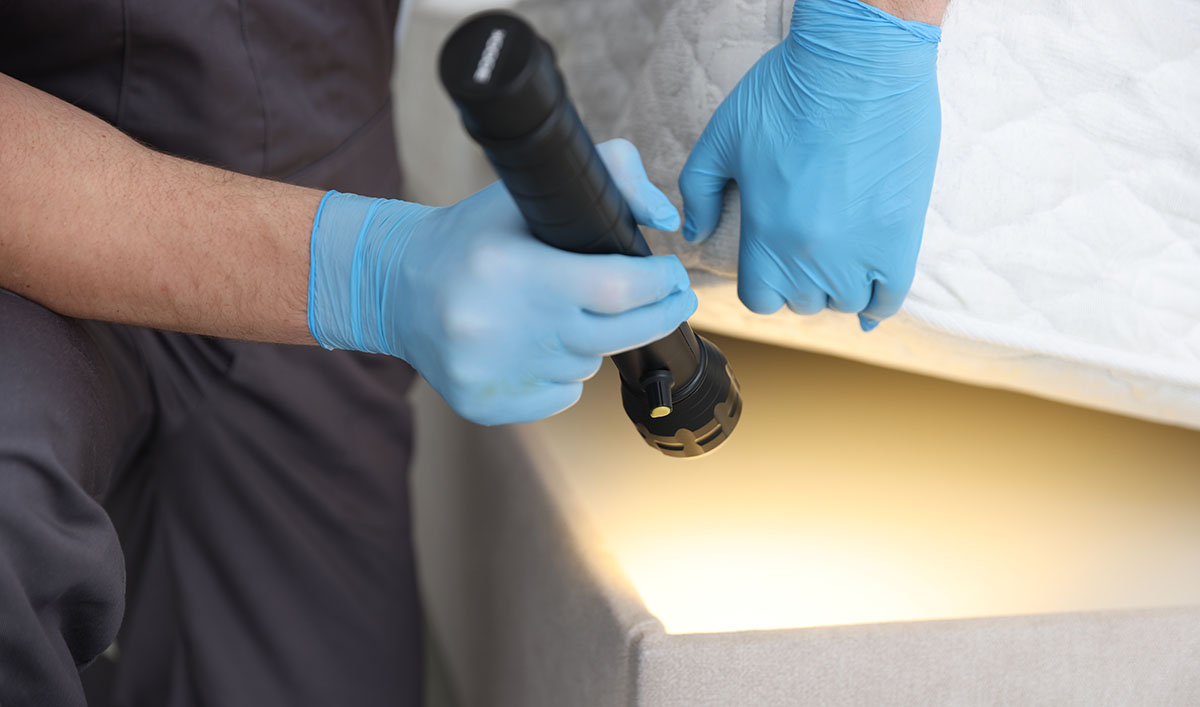
Trying to identify a bug you’ve never seen before? Start with a few plain details. Size. Color. How many legs. Where you found it. How it was acting. Skip trying to match a mental picture from memory. A clear photo and a few notes will get you further than almost anything else. If you’d rather skip straight to a professional read, our Houston pest control team can take it from there. Here’s a step-by-step way to work through it when you have no starting guess at all.
Why “I’ve Never Seen This Before” Is a Common Starting Point
Say the bug turned up on the windowsill again this morning, the same spot where nothing ever shows up. That’s how most first encounters with an unknown insect actually start in a Texas home — not somewhere you check often, but somewhere you don’t. Most homeowners only learn to recognize the handful of insects that already live in their house or yard. Everything else reads as a stranger.
In Houston, the growing season runs long and humid, which means more months of the year with something actively moving around outside, and sometimes inside. Especially right after a good spring rain. Or that first warm week when everything wakes up at once. A house up north gets a hard winter that shuts activity down for months at a stretch. Houston just doesn’t get that mercy.
So the instinct kicks in: open a search engine, type something like “black bug with long legs,” and start scrolling. Dozens of photos later, nothing quite matches. A more structured approach gets you further, faster. It’s actually the same basic process a professional runs through when a photo comes in with zero context attached.
Start With Size and Basic Body Shape
Smaller than a grain of rice, or bigger than a quarter? That’s the first fork in the road, before color even enters the picture. Long and narrow body, or round and compact? Wings flat, folded, tucked under a shell, or no wings at all?
Those questions alone sort insects into broad groups fast. A beetle, a fly, a true bug, and a spider all look different once you’re actually looking closely — well before color or leg count come into it.
Count the Legs and Look for Antennae
Legs tell you fast. Six legs, and you’re almost certainly looking at a true insect. Eight legs points somewhere else entirely — spiders and ticks, a different category with different habits. More than eight, especially a lot of small legs running the length of a long body, usually means centipede or millipede territory.
Antennae narrow it further. Long, visible antennae turn up on plenty of insects; no antennae, or an odd feeler shape, can split apart two bugs that otherwise look like twins. None of this takes expert training. It just takes actually looking, instead of taking in the whole bug as one blurry impression and moving on.
Note the Color and Any Markings
Specific beats vague, every time. Color especially. “Brown” could be a thousand different species. “Reddish-brown with a darker band across the back” narrows the list to a handful. A stripe, a spot, a marking near the head — that’s usually what separates two bugs that would otherwise look identical.
Grab the flashlight from the junk drawer before you grab your phone. A bug photographed under a dim hallway light can read as a completely different color than the same bug caught in daylight. Natural light — or a flash, if that’s what you’ve got — gets you closer to the truth than a shot taken in shadow ever will.
Where You Found It Tells Its Own Story
A damp bathroom and a dry pantry shelf don’t draw the same bugs — and neither one matches whatever’s circling the porch light at night, or floating on the pool’s surface. Where you found it hands you information you already have for free, and most people skip right past it.
Poolside finds follow their own pattern often enough to earn two guides of their own. Found something unfamiliar there? tiny bugs found in pools and types of bugs commonly found in swimming pools cover what usually turns up. Closer to the coast, check beach bugs that bite too. Coastal yards run a different mix than inland ones.
Take a Photo Instead of Trying to Catch It
Don’t try to catch it. A clear photo beats a capture attempt almost every time — more useful, and a lot less risky. One good photo. That’s all it takes. It holds onto the size, color, leg count, and wing position you’ll actually need, without a bite, a sting, or the bug just getting away mid-grab.
Want a size reference? Set a coin or a pen next to it without touching anything. Anyone looking at that photo later, you or a professional, gets an instant sense of scale from it.
The assassin bug is worth knowing by sight specifically, since its shape gets mistaken for harmless look-alikes constantly. Our guide to assassin bugs in Texas covers exactly what sets it apart. One feature, and the whole picture changes.
Using Identification Apps and Tools Effectively
Photo ID apps have actually gotten good. Once you’ve got a clear photo, they’re a real next step, especially for outdoor and common household species. Just don’t treat the app’s guess as the final word. Check it against the size, leg count, and location you already wrote down. That step alone catches most of the misidentifications before they send you chasing the wrong bug.
University entomology sites and local extension offices fill the gap apps leave. Texas A&M AgriLife’s urban entomology resources is where that gap gets covered for Texas specifically, with species common around here that a general-purpose app just doesn’t know as well. It’s built around what actually shows up in a Texas yard, not a national average.
When It’s Worth a Professional Identification Instead
Some calls need a second set of eyes, not just a good guess. That’s true when you’re seeing several insects instead of one, when the location suggests something’s already established rather than a one-time visitor, or when you’d simply rather have confirmation before deciding what to do. The steps above handle plenty solo. These situations don’t.
We’ve been at this in Houston since 1949, three generations deep, and a trained technician has physically seen more regional species than any app or search result ever will. They factor in where it turned up, what’s nearby, and the time of year — context a single photo just can’t hold. AgriLife’s insect fact sheets make a solid bridge for confirming a species before deciding whether a professional look is even necessary.
FAQ
What information helps identify an unknown bug the fastest?
A clear photo in good light, plus the bug’s approximate size, its leg count, and exactly where you found it. Those four details do more work than almost anything else, and they’re the same starting points a professional would ask for first.
Is it dangerous if I can’t identify a bug I found in my house?
Not right away, no. Most household insects are harmless, and not knowing what one is doesn’t change that. If a specific find has you uneasy, skip handling it, take a photo instead, and reach out for confirmation before you decide what to do next.
Should I take a photo or catch the bug for identification?
Take the photo. It captures the size, color, leg count, and wing position you need without risking a bite or a sting, and it doesn’t depend on the bug holding still long enough to be caught.
If you’ve worked through these steps and still aren’t sure what you’re looking at, or you’d simply rather have a trained eye confirm it, call us at (281) 730-9500 before 1pm Monday through Friday for same-day service. Or reach out through our Houston pest control team page, and we’ll help you identify what’s actually on your property and whether it calls for removal or just peace of mind.