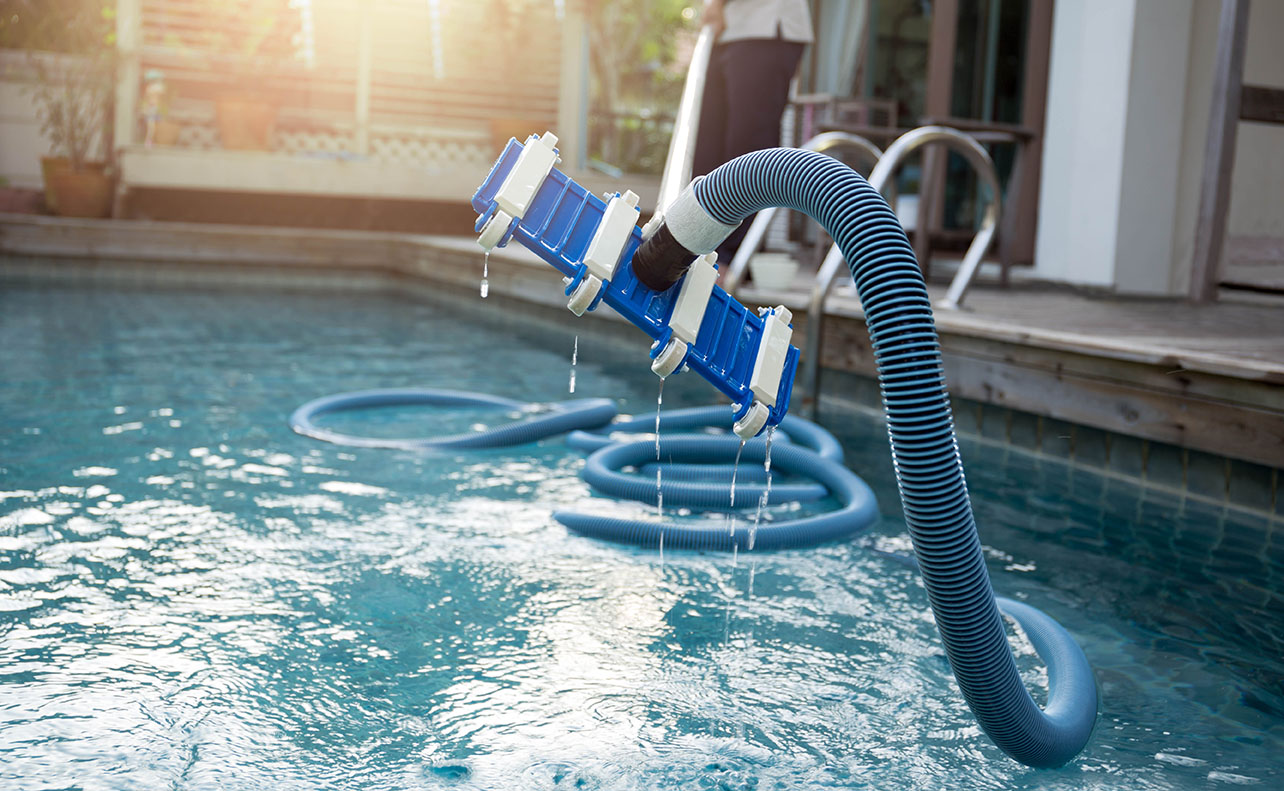
A pool or hot tub problem left unattended gets expensive fast. And the company you need depends on what’s wrong. Our Houston Hot Tub & Pool team gets asked which category a job falls into even more than which company to hire. It’s the right place to start before you pick anyone.
Cleaning, Repair, Resurfacing, or Remodel: Scope the Job First
Cleaning, repair, resurfacing, or a full remodel? Pool and hot tub service spans four fairly different jobs. Routine cleaning and water chemistry. Equipment repair. Redoing the surface, what the trade calls resurfacing or replastering. Full remodels or new construction. A company that’s excellent at one isn’t equipped for another.
Before you call anyone, be honest about which category your problem falls into. A pool that’s gone green after shock and algaecide, or turned green overnight, is usually a chemistry or cleaning issue. Especially common right after a heavy Gulf Coast rain washes debris and runoff into the water. A pump that won’t run, or a heater that won’t hold temperature, is a repair issue instead. A rough, stained, or aging surface is a resurfacing conversation. A layout change or a brand-new pool is construction.
Get that right first. Everything else gets simpler once you do.
What Should a Routine Cleaning Visit Actually Include?
Expect water testing and balancing on every routine visit. Skimming and vacuuming debris too. It should also include brushing surfaces, emptying baskets, and a visual check of the equipment pad. Ask exactly what’s included in a routine visit. Ask what triggers an extra charge. Get that answer in writing.
Persistent problems like mustard algae, or high cyanuric acid levels that won’t come down, usually mean the chemistry program needs adjusting. That’s a different fix than another round of the same treatment. If a company keeps applying the same fix without changing the chemistry plan itself, question that directly. Houston’s long, humid stretches push algae and bacteria growth faster than milder climates do. A chemistry plan that worked fine in spring may need adjusting again by midsummer.
Repair Work: Ask What They Diagnose Before They Quote
The pump hums. It won’t run. A pump that hums but won’t run could mean a bad capacitor, a seized motor, or a wiring issue. Each has a different price. Each has a different fix. This is where a weak company gets expensive fast.
Ask whether a technician diagnoses the actual failure before quoting a repair. Or whether they quote a part swap before confirming what’s broken. A company that explains what failed, and why, in plain terms is the more trustworthy choice. That’s true whether they’re recommending a repair or a replacement.
Sometimes a pump is old enough that repair and replacement cost sit close together. In that case, take a look at ENERGY STAR’s guidance on pool pump efficiency. It’s a useful outside reference for weighing that decision. A newer, more efficient pump can sometimes pay for itself over a few seasons. Worth asking a technician to walk through both options side by side.
Resurfacing, Replastering, or a Full Remodel: A Different Decision Entirely
Resurfacing and remodeling run on a different timeline than routine service or repair. The price scale is different too. Ask whether the company you’re considering does this work directly, or subcontracts it out. Ask for examples of finished projects, not just maintenance photos.
A written scope should cover surface material options and drainage. It should also spell out how long the pool will be out of use during the project. This isn’t the same call you’d make about a weekly cleaning visit. Treat it that way from the first call. Expect a much more detailed proposal in return.
Licensing, Insurance, and Chemical Handling in Texas
Texas regulates public and semi-public pools through the Department of State Health Services. Most residential backyard pools fall outside that oversight. Still, the state’s public pool and spa guidance is a useful reference. It covers how to store and handle those chemicals.
Ask whether technicians follow label directions for the chemicals they use and store on-site during a visit. Ask about liability coverage in case of property damage, too. A company that answers plainly, without hedging, is the one you want handling the chemicals and equipment on your property.
Hot Tubs, Too, and How Often a Visit Actually Needs to Happen
Not every pool company touches hot tubs. And not every hot tub company handles pools. Ask directly, especially if you have both and would rather deal with one provider. Hot tub service has its own equipment quirks. Jets, heaters, and control systems that don’t always overlap with pool equipment. If a company hedges on this instead of a clear yes or no, that’s useful information on its own.
There’s no single answer on frequency, either. A company that gives you one flat number without asking anything first is worth a second look. Usage, bather load, tree cover, and rainfall all shift how often chemistry drifts or debris builds up. A heavily used pool during a Houston summer needs closer attention. A lightly used one, in a mild stretch of weather, needs less. Ask how a company sets a schedule for a property like yours. Ask what would make them recommend a different frequency later.
Red Flags Worth Walking Away From
A same-day contract lands in front of you before anyone’s assessed the pool. Sign here, it says. That’s a red flag on its own. So is a company that won’t put a scope of work in writing. Same with one that quotes a repair before diagnosing the actual failure.
The good news is that a legitimate pool and hot tub company is happy to explain its process. It walks you through it step by step, because it’s confident the process holds up.
FAQ
What questions should I ask before hiring a pool service company?
Ask what’s included in a routine visit. Ask how they diagnose equipment failures before quoting repairs. Ask whether resurfacing or construction work is handled directly, or subcontracted. Get a written scope before comparing prices between companies.
Does the same company handle both pool and hot tub service?
Not always. Hot tubs have their own equipment, jets, heaters, and control systems that don’t fully overlap with pool equipment. Ask directly rather than assuming one provider automatically covers both.
How do I know if a pool company is licensed in Texas?
Ask directly. Ask for documentation, not just a verbal answer. If the project involves construction or a major remodel, confirm the contractor licensing that applies to that scope of work.
What’s the difference between pool maintenance, repair, and construction service?
Maintenance covers routine cleaning and water chemistry. Repair covers equipment that’s already failing: pumps, heaters, filtration. Construction and remodeling cover resurfacing, replastering, or building something new. Many companies specialize in one or two of these rather than all three.
How often should a professional service visit my pool or hot tub?
It depends on usage, bather load, and local conditions like rainfall and heat. No single frequency fits every property. A company that assesses your pool or hot tub first, before proposing a schedule, is a stronger sign than one that just quotes a flat weekly visit. Asking questions first is the better habit.
What most homeowners don’t realize is simple. Getting the type right, cleaning, repair, resurfacing, or remodel, before calling anyone saves real time and money. Call (281) 730-9500, or see how our Houston Hot Tub & Pool team can help you figure out which one applies. That includes construction and remodel work, equipment repair, hot tub repair, or routine cleaning service.